

Efficient receiving processes are fundamental to maintaining inventory accuracy and ensuring a seamless supply chain flow. 3PL professionals frequently encounter issues such as delays in dock scheduling, inaccuracies in GRN matching, and challenges with OS&D reporting, which can disrupt putaway and reconciliation. At Clarus WMS, we provide solutions that automate ASN handling, barcode and GS1 label scanning, and licence-plate receiving, delivering immediate improvements in receiving accuracy and KPI performance.
Traditionally, setting up robust receiving workflows involved manual bookings and extensive inspections, often requiring weeks to resolve shortages or damages. In contrast, the Clarus WMS approach leverages cloud integration and GS1-standard data capture to reduce dock-to-stock time, enabling real-time FEFO checks, licence-plate receiving and cross docking in days rather than weeks, while minimising labour and enhancing overall efficiency. Real-time data from handheld devices and dashboards also gives managers visibility of open tasks, bottlenecks, and quarantine stock so they can make faster decisions.
The result of traditional methods:
- Delays in putaway due to manual GRN verification and poor ASN integration
- Inefficiencies in inspection workflows leading to unreported OS&D and quarantine delays
- Lost revenue from inaccuracies in reconciliation and non-compliance with KPI targets
This article breaks down the failures of outdated receiving methods and explores how Clarus WMS rethinks the process with modern automation for superior accuracy and dock scheduling. It combines industry data with real-world warehousing experience to provide actionable insights for 3PL and warehouse professionals.
What Is ASN and How Do I Optimise It?
An Advance Shipping Notice (ASN) or DESADV is a digital document providing advance details on incoming shipments, crucial for efficient dock scheduling and receiving accuracy in warehouse operations. GS1 UK defines the ASN as a document that provides detailed information about a pending delivery and is sent before goods arrive so the receiver can prepare for acceptance (GS1 UK). It typically includes SSCC pallet identifiers, product codes, quantities, batch or lot data and PO references, enabling proactive quarantine planning and OS&D anticipation.
In 3PL facilities handling perishables, ASN data supports FEFO prioritisation during inspection, reducing spoilage and write-offs by ensuring short-dated pallets are identified and processed first. External EDI providers report that using ASNs can reduce receiving costs by up to 40 percent by allowing teams to pre-allocate space, labour and equipment before the truck arrives (home.messagexchange.com).
Optimising ASN involves:
- Enforcing GS1 standards for product, batch, SSCC and date codes
- Integrating ASNs into the WMS so pre-receipts are created automatically
- Using RFID or high-accuracy barcode capture to confirm SSCC and contents at the dock
- Driving dock allocations and labour planning directly from ASN data
As GS1 notes, ASNs provide detailed information about a pending delivery, including when the shipment will arrive and what it contains, so receivers can prepare resources in advance (disciplinas.tecnico.ulisboa.pt).
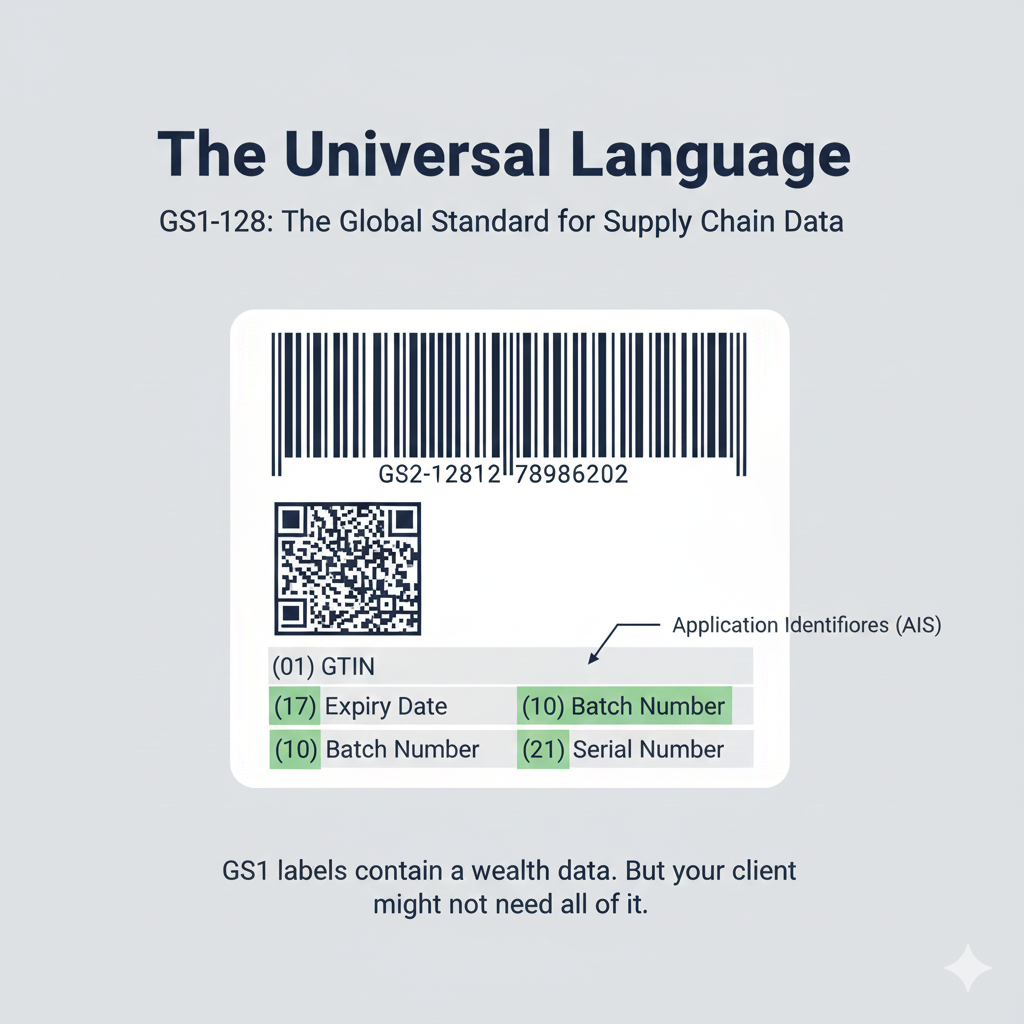
From a practical standpoint, Clarus WMS consultants describe a “holy grail” flow: when an ASN includes SSCC, batch, product code and quantity for each pallet, the handheld can accept a pallet with a single scan of the SSCC, automatically capturing all other attributes from the ASN. This makes licence-plate receiving dramatically faster and reduces manual data entry errors.
At Clarus WMS, ASN processing is fully integrated into barcode and GS1 label scanning. Pre-receipts created from the ASN drive dock scheduling, blind or guided receiving flows, and KPI tracking for dock-to-stock and receiving accuracy. This integration supports scalability so warehouses can handle increased volumes without compromising control or compliance.
Do I Need GRN for My Receiving Operations?
Yes, a Goods Received Note (GRN) is essential once your operation scales beyond very simple receipts. A GRN is an internal document that confirms the receipt of goods from a supplier and records quantity and condition; it is central to maintaining accurate stock records and synchronising procurement, inventory and finance workflows (Tofu)
For small warehouses with limited SKUs and local suppliers, basic checklists may suffice. However, as volumes grow and you add international shipments, complex packaging hierarchies and customer-specific service levels, a structured GRN process becomes critical to:
- Verify deliveries against purchase orders
- Document OS&D issues and discrepancies
- Trigger quarantine or hold statuses for suspect stock
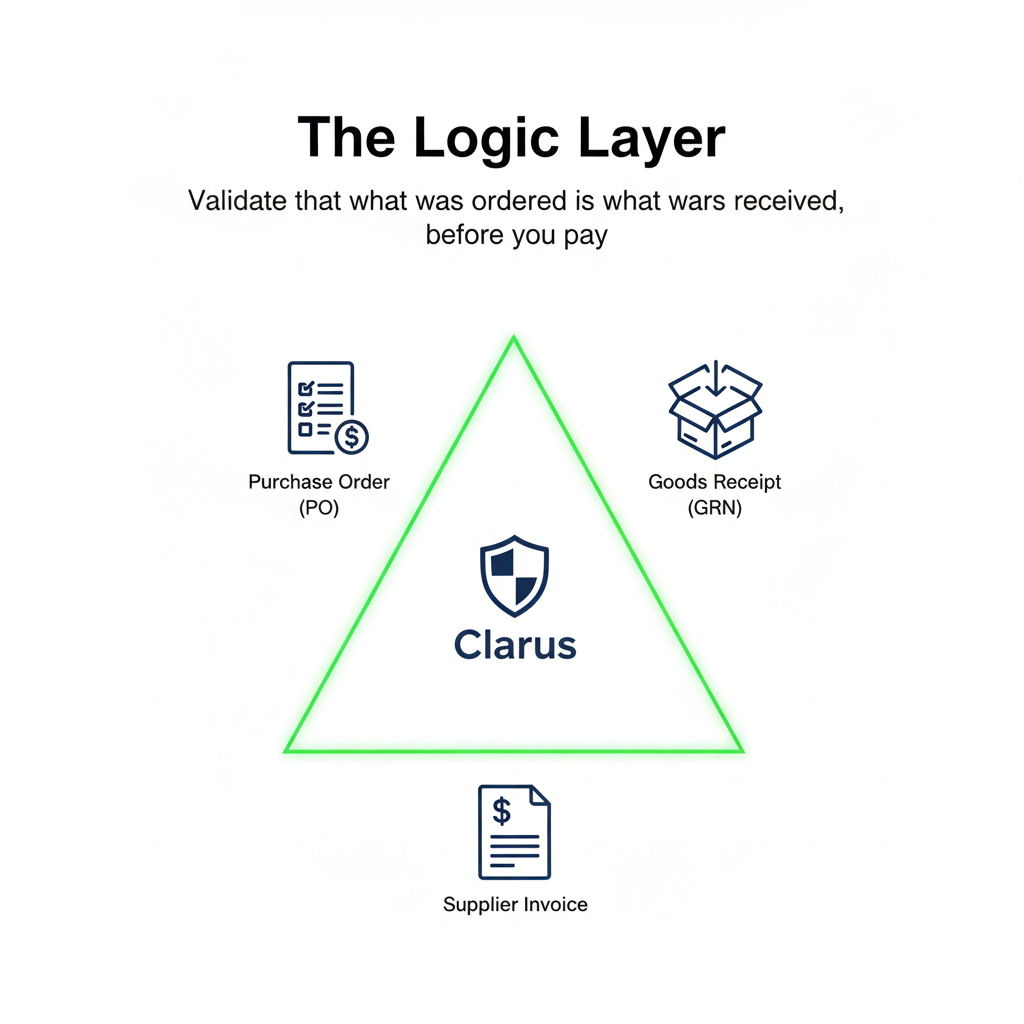
- Support three-way matching between PO, GRN and invoice
Accounting and procurement specialists describe three-way matching as the process of comparing PO, GRN and supplier invoice before payment, to prevent overpayments, duplicates and fraud (softco.com). Without a GRN, this control framework is weakened.
Digitising GRN capture inside the WMS eliminates re-keying and allows receiving events to update inventory in real time. Vendors emphasise that GRN-driven receiving cycle time and receiving accuracy are foundational warehouse KPIs that should be tracked continuously (The Access Group). Clarus WMS supports configurable GRN templates and three-way match rules per account, so 3PLs can align financial controls with each client’s requirements.
How Does SSCC Enhance Pallet Tracking?
The Serial Shipping Container Code (SSCC) is a GS1 identification key that provides a unique identifier for each logistics unit, such as a case, pallet or parcel (gs1.org). GS1 logistics labels require that each pallet carry a unique SSCC so it can be tracked and traced end-to-end through the supply chain (gs1.org).
In licence-plate receiving, the SSCC acts as a single “licence plate” for the pallet. When the pallet is scanned, the WMS retrieves all linked data from the ASN or pre-receipt – SKUs, quantities, batch, expiry and owner – and applies it to inventory in one step. Clarus handheld flows use GS1-standard labels containing up to three barcodes for product and quantity, batch and SSCC, so operators can capture all required attributes with a few scans instead of typing each field.
Optimising SSCC use involves:
- Ensuring every pallet leaving suppliers carries a GS1-compliant label with a valid SSCC
- Mapping SSCC fields correctly into the WMS, including ownership, product and date codes
- Using SSCC as the primary key in OS&D investigations and claim documentation
- Extending SSCC usage to cross docking and outbound shipments so the same ID flows through the whole lifecycle
When SSCC labels are combined with RFID portals or automated scanning at the dock, read accuracy can approach 99 percent for tagged items, significantly improving visibility and reducing manual checks (RFID JOURNAL).
What Role Does OS&D Play in Receiving Accuracy?
OS&D (Over, Short and Damaged) reporting is pivotal in maintaining receiving accuracy by documenting discrepancies discovered during inspection and reconciling them against the purchase order. In logistics, OS&D describes variances where the quantity or condition of goods received does not match what was ordered or expected (Freightcourse).
Effective OS&D management typically includes:
- Structured reason codes for overs, shorts, visible damage and concealed damage
- Photographic evidence captured at the dock and linked to the receipt
- Automated holds or quarantine when damage or quality issues are reported
- Clear workflows for rework, disposal and customer approval
Specialist guidance stresses that accurate, timely OS&D documentation and the use of technology such as barcode scanning or WMS exception workflows are among the easiest ways to reduce errors and protect margins (LogiWorld, LLC). Clarus WMS supports OS&D via stock statuses, reason codes and on-hold rules, so damaged or disputed pallets cannot be allocated until the issue is resolved.
One Clarus consultant recalls managing a zero-alcohol beverage account where fragile glass packaging caused frequent breakages, repeated quarantines and pallet rework. Capturing each damaged pallet with consistent OS&D reason codes and statuses would have made it far easier to evidence the root cause to the customer and drive packaging improvements.
Traditional Methods vs Clarus WMS for Receiving
Traditional methods depend on manual GRN and ASN processing, often causing delays in dock scheduling and inaccuracies in OS&D reporting that hinder reconciliation. Paper-based checks and spreadsheet reconciliations introduce latency and make it hard to measure dock-to-stock time. Industry evidence shows that best-in-class operations often target dock-to-stock times of 2 to 4 hours, while average performers can sit at 12 to 24 hours (hopstack.io).
These traditional approaches also lack real-time barcode or RFID integration, making FEFO checks labour-intensive and putaway inefficient. By contrast, modern warehouse automation and digitisation are proven to increase productivity, reduce labour dependency and lower handling costs (McKinsey & Company).
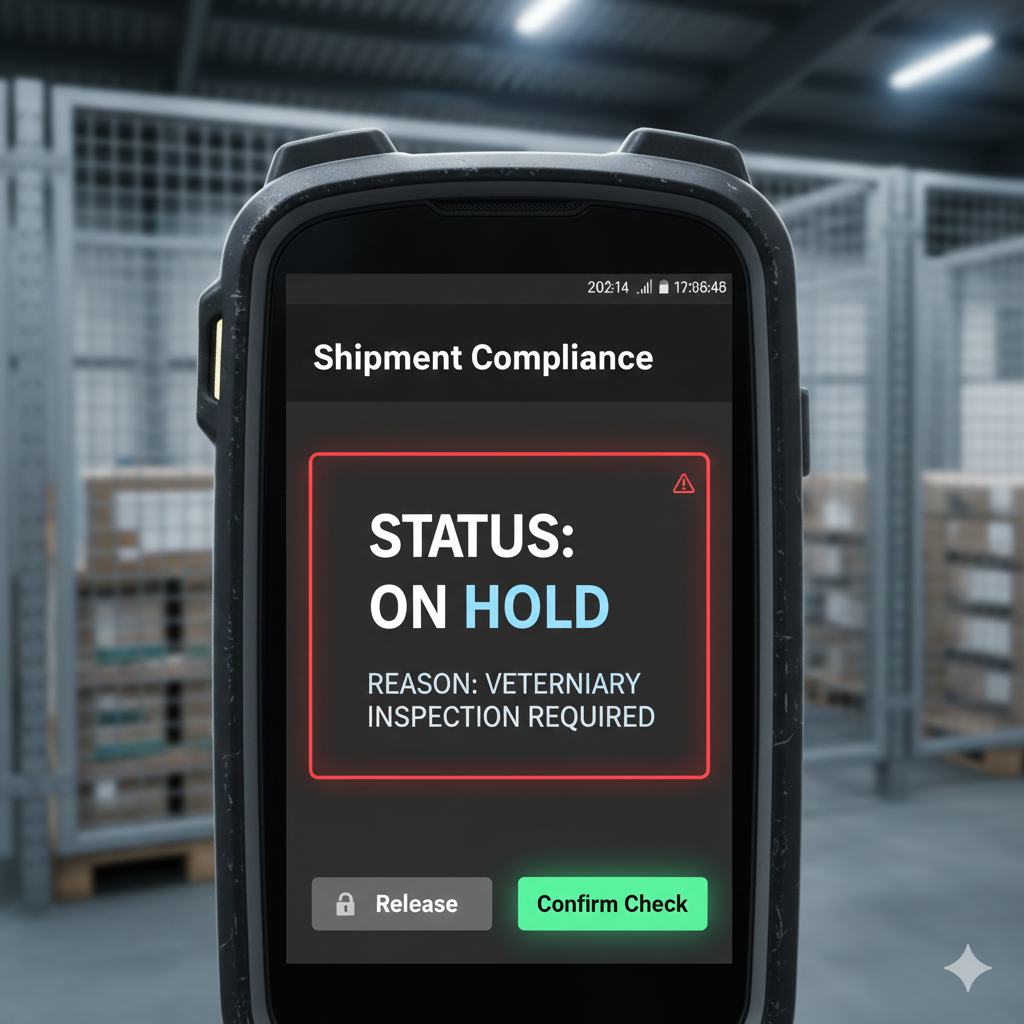
Clarus WMS automates licence-plate receiving with GS1 SSCC, handheld workflows and configurable rules for blind receipts, pre-receipts and cross docking. Where legacy systems struggle with quarantine management and exception handling, Clarus provides hold statuses, reason codes and client-specific rules that support veterinary sign-off, quality checks and regulatory compliance where required. This modern approach minimises disruptions and supports 3PLs in achieving tighter dock-to-stock KPIs, improved receiving accuracy and better cost control.
Why Teams Struggle with Receiving
Warehouse teams often struggle with receiving due to outdated processes that compromise accuracy and dock-to-stock KPIs.
- Limited automation in ASN handling, leading to errors in SSCC verification and GRN matching
- Manual inspection for OS&D, increasing risks of unreported damages and quarantine delays
- Poor integration for FEFO, causing inefficiencies in putaway and reconciliation
- Inadequate dock scheduling, resulting in overage and shortage discrepancies
- Unplanned arrivals, such as unscheduled supplier shipments or delayed containers, which can suddenly double the number of inbound vehicles and overwhelm available labour and space
Industry reports repeatedly highlight inventory accuracy, receiving efficiency and space utilisation as some of the most critical warehouse KPIs in 2025 (hopstack.io). Without robust receiving processes, all downstream activities – from picking to billing – inherit these upstream errors.
How Does Clarus WMS Handle Receiving?
At Clarus WMS, receiving is handled through a cloud platform that automates ASN and GRN workflows for real-time accuracy and efficient dock scheduling. Our standard GS1-based handheld flows can scan GS1 logistics labels to capture product, quantity, batch, SSCC and date codes without manual keying. This means that, where an ASN contains full SSCC and product details, operators can accept pallets with a single scan and move directly into putaway or cross docking.
Clarus dashboards provide live visibility of open receipts, dock activity, putaway tasks and quarantine stock, so supervisors can see where labour is needed. In our work with JODA, a refrigeration logistics specialist, Clarus WMS helped improve inventory accuracy to 97 percent in the first year and 99 percent in the second, while cutting stocktakes from weeks to days (Clarus WMS). This demonstrates how robust receiving and stock control workflows translate into measurable accuracy gains.
Real-Time Monitoring
Real-time monitoring in Clarus tracks ASN arrivals, receipts and putaway tasks with timestamped events, so managers can measure true dock-to-stock cycle time and receiving accuracy. Automatic status changes on tasks – such as “at dock”, “received”, “putaway started” and “putaway complete” – give a clear picture of throughput.
Vendors specialising in dock-door automation report that automated scanning using computer vision and RFID can significantly increase inbound throughput and reduce manual data capture at the dock (kargo.ai). Clarus integrates with these technologies so that pallet movements at the dock automatically post to the WMS without additional scanning.
Scalable Adaptation
Scalability is essential as 3PLs and warehouses face volatile demand, seasonal peaks and expanding SKU ranges. Recent MHI and Deloitte research notes that 55 percent of supply chain leaders are increasing their technology investments, with 88 percent planning to spend more than 1 million dollars on supply chain innovation (TecHR).
Clarus WMS supports this need for scalable adaptation by allowing each client account to define its own requirements for batch, expiry, blind receiving, cross docking and three-way matching. Handheld flows can be toggled at account and product level so, for example, packaging SKUs that do not need batch control can be received with minimal steps, while pharma or fresh produce lines enforce strict batch and expiry capture.
Full Visibility
Full visibility means more than just seeing what is in stock; it is about understanding the status, history and constraints on every pallet. Clarus provides:
- Transactional histories for each SSCC or pallet licence plate
- On-hold and quarantine reasons, including who placed the hold and when
- Stock ageing views based on FEFO, FIFO or customer-specific rules
- Client and portal reporting so customers can see OS&D, damage and expiry trends directly
Studies on real-time data in warehousing highlight that live visibility into operations and inventory is crucial for preventing bottlenecks and improving decision making (AutoScheduler.ai). Clarus WMS gives both operators and their customers that level of insight, helping them resolve issues quickly and plan more confidently.
Ready to See It in Action?
Enhancing receiving processes with Clarus WMS can transform your warehouse efficiency, ensuring superior accuracy and streamlined operations. Envision automated ASN handling that addresses common challenges such as OS&D, blind receipts and cross docking with minimal manual input. Contact Clarus WMS for a demo to explore how these capabilities fit your operation.
References
- GS1 UK, “ASN message implementation guideline”
- GS1, “Serial Shipping Container Code (SSCC)”
- GS1, “GS1 Logistic Label Guideline”
- GS1 UK, “Creating SSCCs and logistics labels”
- MessageXchange, “Using EDI to improve supply chain efficiency”
- Commport, “Advanced Shipping Notice made simple”
- ToFu, “What Is a Goods Received Note and Why Do You Need It”
- Omneelab, “Goods Received Note (GRN): Purpose, Benefits & Process Flow”
- AccountingInside, “Goods Received Note (Advantages & Disadvantages)”
- SoftCo, “Three-way matching process in AP”
- Procurement Tactics, “Three-Way Matching — Definition, Example, and Best Practices”
- Access Group, “14 Important Warehousing KPIs”
- TransLution, “Top 25 Warehouse KPIs: Receiving”
- Freightcourse, “Over, Short & Damaged: Meaning, Report & Claim Guide”
- LOGOS 3PL, “OS&D (Overages, Shortages, and Damages)”
- LogiWorld, “Understanding Overages, Shortages & Damages (OS&D) in Logistics”
- Fleetx, “Streamlining OS&D processes to refine logistics operations”
- RFID Journal, “How Accurate Can RFID Tracking Be?”
- Solata Tech, “5 RFID Statistics Manufacturers Need to Know (2025)”
- Hopstack, “Dock-to-Stock Time: Formula & Proven Strategies to Optimise”
- Seeteria, “Dock-to-stock in 8 hours”
- McKinsey & Company, “Navigating warehouse automation strategy for the distributor market”
- MHI, “The Collaborative Supply Chain 2024 – Annual Industry Report”
- MHI Solutions / Deloitte, “Supply Chain Investment Growth in Technologies That Empower Human Workforce”
- Kargo, “Dock-Door Automation: Faster Throughput, Leaner Teams”
- AutoScheduler, “From Data to Action: The Role of Real-Time Visibility in Warehouse Efficiency”
- Daguer Logistics, “The Importance of Real-Time Data in Warehouse Operations”
- Hopstack, “Top 24 Warehouse KPIs & Metrics to Track in 2025”
- Clarus WMS, “Helping JODA Achieve 99% Stock Accuracy”