


As supply chains face increasing pressure to balance sustainability with uncompromising compliance, logistics providers are being forced to rethink their operations from the ground up. For Campeys, the solution was both physical and digital.
The business recently completed a major milestone: moving into a brand-new, net-zero warehouse. This facility is designed to put the company at the forefront of the industry, running electric forklift trucks powered entirely by rooftop solar panels. As Harry Campey, Commercial Operations Director, notes, sustainability is no longer just a corporate buzzword; it is a vital commercial lever. Having a net-zero warehouse is a massive advantage, helping to gain and retain new business in a modern market that demands greener transport and warehousing.
However, the new physical footprint was only half the equation. The business had recently secured a long-term storage contract with a major transport customer, which came with a strict prerequisite: the site had to achieve and maintain BRC AA grade accreditation for food-grade storage. To manage the intricacies of food safety, allergens, and absolute traceability, Campeys needed a warehouse management system (WMS) that could guarantee control, audit readiness, and scalability.
The Unforgiving Reality of Food-Grade Storage
Stepping into the food-grade storage sector requires an entirely different level of operational rigor. Handling consumer consumables, particularly those involving allergens, leaves zero room for error. If a product needs to be recalled due to contamination, the warehouse must be able to instantly identify where the product came from, where it was stored, what it was stored next to, and exactly which customer it was dispatched to.
Without immediate, system-driven traceability, dealing with potentially harmful products out in the market becomes a dangerous liability. Simon Batty, Quality Manager at Campeys, understood this pressure intimately. Transitioning into the new warehouse meant moving from handling a single product line to managing a multitude of products, including gluten and other allergens, requiring vastly expanded control measures.
Relying on legacy methods, manual logs, or spreadsheets in this environment simply does not work. Chasing paper trails, digging through historical data, and calling various departments to piece together a product’s journey during a high-stakes recall is not just a nightmare—it is fundamentally unsafe and practically impossible to do within compliance timeframes. Campeys needed a digital backbone that could track every movement perfectly.

Why a New WMS Was a Strategic Necessity
To meet the stringent requirements of their customers and the BRC auditors, the leadership team required a system that provided total transparency. If you want to entertain a conversation with customers regarding food storage and distribution, having BRC accreditation is a mandatory entry ticket—and a robust WMS is what makes that accreditation possible.
Campeys selected a cloud-based WMS because they wanted a platform they could grow into. The operational strategy was to start with the basics—simple pallet-in, pallet-out functionality—and then layer on complexity as customer requirements became more demanding.
Traceability and audit readiness were the primary drivers behind the software choice. The system needed to be built around compliance, capable of displaying current stock holdings, transaction histories, and real-time movements at a moment’s notice. It was critical that the software not only captured this data but made it instantly accessible and visually intuitive for management, warehouse operatives, and auditors alike.
A Frictionless Rollout on the Warehouse Floor
Implementing new enterprise software often introduces friction, slowing down operations while staff navigate complex new interfaces. For Campeys, the rollout reality was entirely different. The adoption curve was remarkably smooth, largely due to the system’s intuitive design.
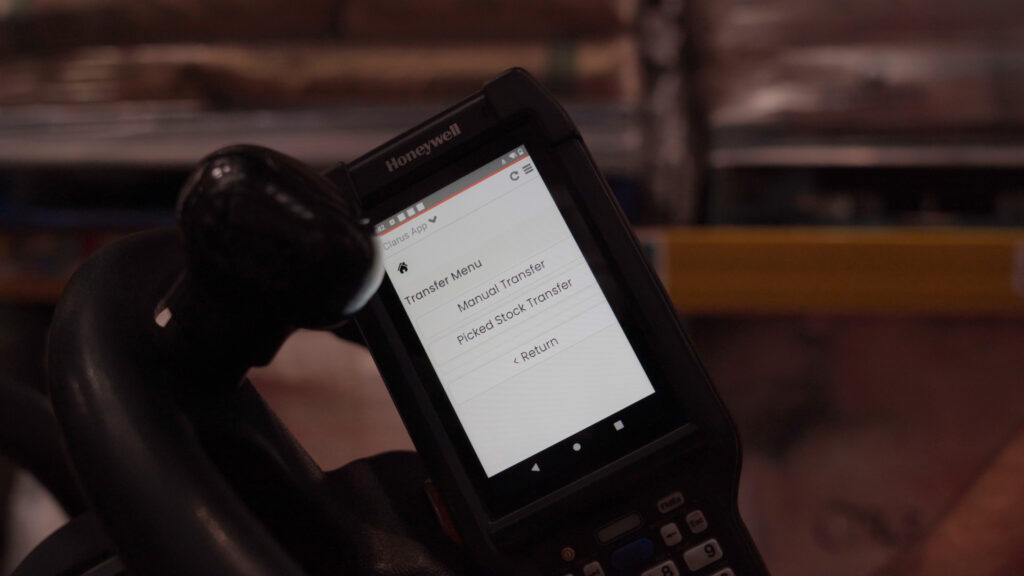
The system seamlessly integrated into the culture of the warehouse staff. It proved to be a highly friendly user interface, far removed from the complex, rigid legacy systems that require deep technical knowledge to navigate. Staff found that essential functions were clearly laid out, meaning they didn’t have to deep-dive into hidden menus just to find basic operational tools.
This ease of use translated into rapid, organic scaling. When Campeys first implemented the software, they had just two members of the team using it daily in their previous facility. Upon moving to the new site, that number quickly scaled to over twelve warehouse staff managing loading, unloading, picking, and dispatching. Experienced operatives were soon training new staff themselves, proving that the software was intuitive enough to self-perpetuate within the team.
When minor hurdles did arise, the warehouse team utilised the integrated web chat support. Whether they needed a quick two-minute fix to locate a setting or more detailed advice, having responsive, human support readily available kept operations moving without frustrating delays.
Measurable Results and BRC AA Accreditation
The impact of the new WMS was immediate and quantifiable. Crucially, the site successfully secured and maintained its required BRC AA accreditation. During the auditing process, the auditor explicitly praised the software for its ease of use and the complete transparency it provided, validating the investment from a compliance standpoint.
The most striking operational metric emerged from the stringent mock recalls required by BRC standards. Campeys must prove they can trace a product’s entire lifecycle through the supply chain rapidly. Through the WMS tracking capabilities, the quality team can now execute a full traceability recall test in under five minutes.
Beyond compliance, the commercial advantages have been transformative. By utilizing the customer-facing portal, Campeys gave their clients the exact same live visibility that their internal teams use. Customers can now log in to check stock levels, view live reports, and set up automated daily or weekly holdings updates.
This transparent approach has virtually eradicated the traditional, time-consuming “where is my stock” queries that plague many 3PL operations. Because the data is live and accurate, clients no longer need to call the warehouse to verify inventory; they can simply pull the reports themselves. Additionally, the system’s automated capabilities have slashed the time spent on administrative tasks, cutting down the hours previously lost to investigating invoicing discrepancies.
Reflections on Scaling with Confidence
Looking back on the transition, the Campeys leadership team views the WMS as a foundational pillar of their ongoing growth. The initial goal was to find a system that could start basic and scale naturally without forcing the company through painful, expensive software migrations down the line.
That strategy has paid off. As the business becomes more intricate and expands into different markets and sectors, they have the confidence that their core operational software will adapt alongside them. The system has proven flexible enough to handle both highly specialized, complex clients and simpler, low-touch storage accounts with equal efficiency.
Furthermore, the support from the software provider has remained consistent. It is common in the tech space for customer service to degrade as a vendor grows, but Campeys has experienced reliable, ongoing support that has helped them navigate their own expansion seamlessly.
The Path Forward: Transparency as a Service
The modern logistics industry is no longer just about moving pallets from point A to point B; it is about managing data, mitigating risk, and building trust. Campeys has proven that by pairing a state-of-the-art, sustainable warehouse with a transparent, highly controlled digital ecosystem, 3PLs can elevate their service offering entirely.
Trust is built when a logistics provider can open its digital doors and tell a customer to look at the exact same data they are looking at. There is no hiding, no data manipulation, and no blind spots. This two-way street of trust is what cements long-term commercial relationships and drives sustainable growth.
For operations dealing with high-stakes inventory, the lesson is clear: eliminate the friction in your warehouse, give your customers absolute visibility, and ensure your operational standards are backed by irrefutable digital proof.